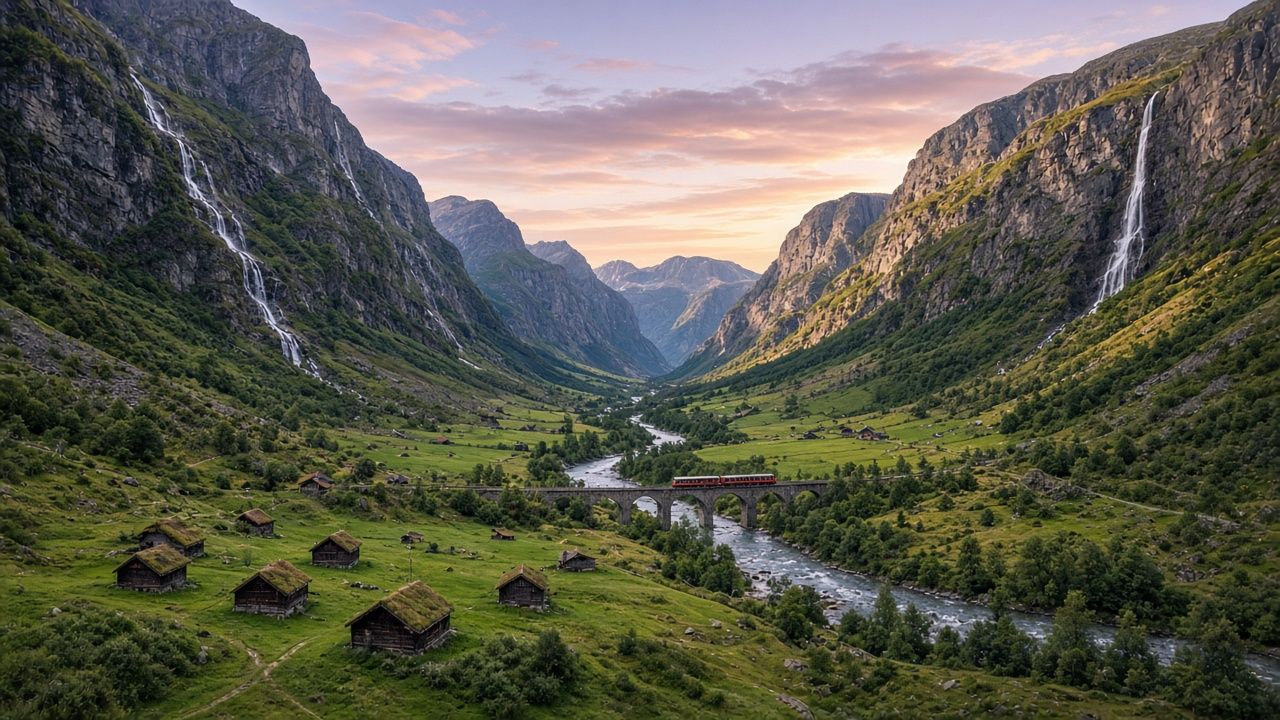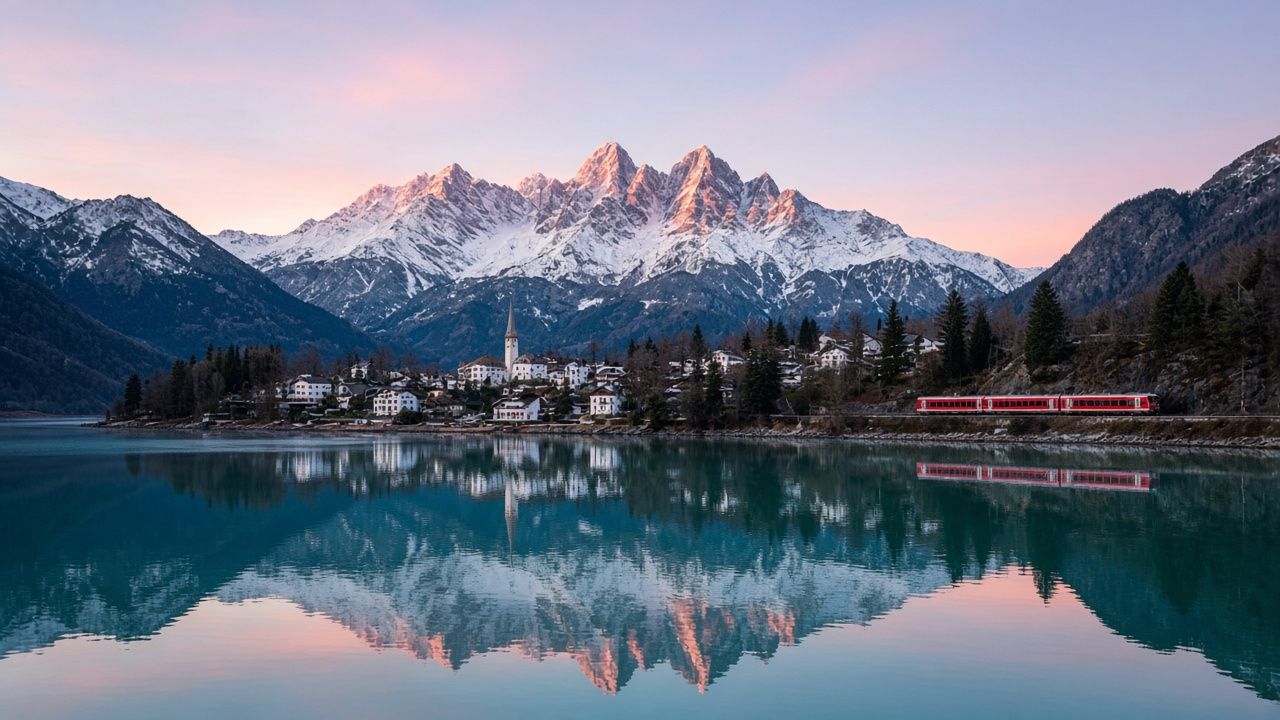
A plain guide to Switzerland
JaaciSuiza
Switzerland, explained one valley, train and table at a time.
How the trains fit together, what each region feels like in each season, and what to eat when you get there. Written for curious first-time visitors.
Start with Swiss Rail DaysThe route
One line, three stops
Six landscapes
A small country with many moods
Within a few hours by train you can go from arcaded old towns on fast green rivers to palm-lined southern lakes, terraced vineyards and car-free mountain villages.
Read Lakes & Mountain Towns-
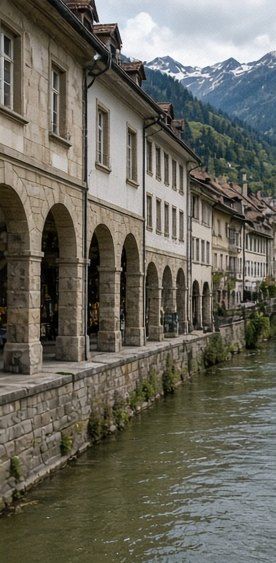
Old towns on riversArcades, fountains and bridges -
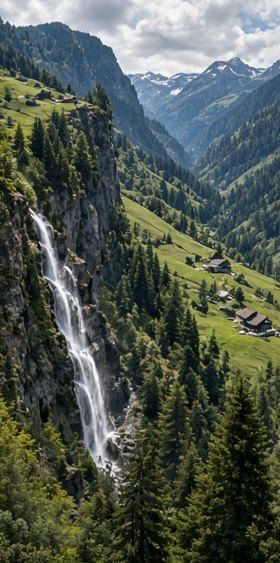
Waterfall valleysCliffs, meadows and spray -
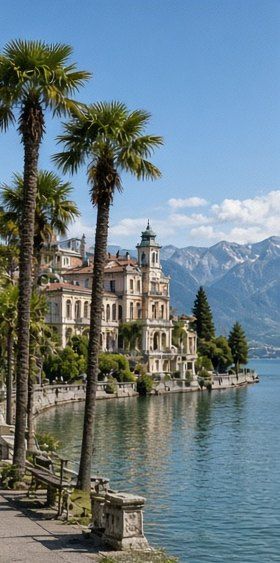
Southern lakesPalms, piazzas and Italian -
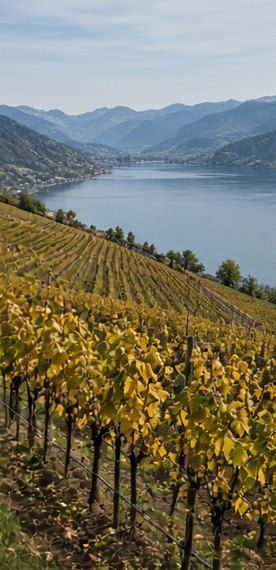
Vineyard terracesStone walls above the water -
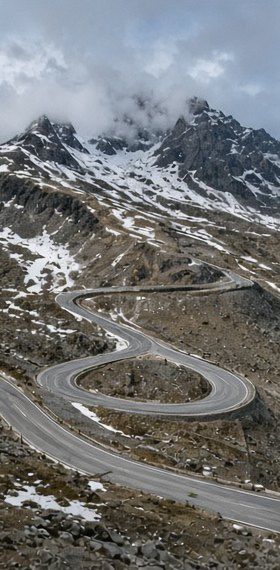
High passesOpen in summer, snow in winter -
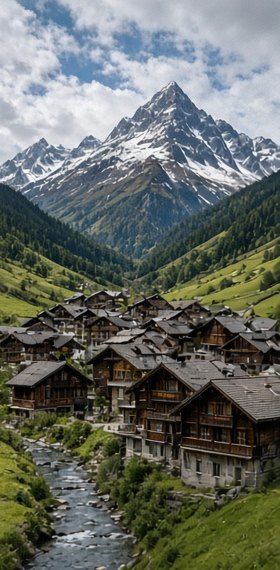
Car-free villagesArrive by train, walk everywhere
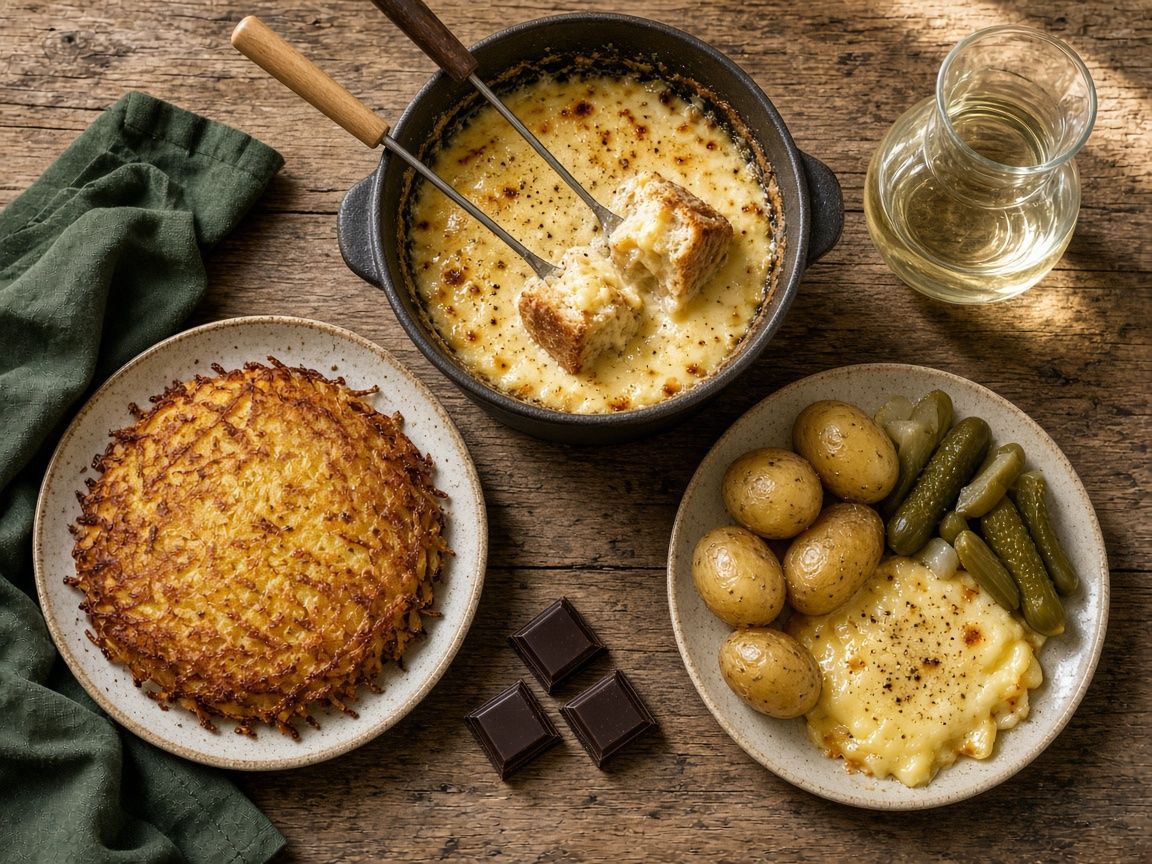
At the table
Fondue, the unhurried way
- Rub the pot. A cut clove of garlic around the inside of the caquelon.
- Melt slowly. Grated cheese with a splash of dry white wine, stirred over low heat.
- Stir in figures of eight. Each dip of bread keeps the cheese moving and smooth.
- Save the crust. The toasted layer at the bottom is a treat to share at the end.
Altitude profile
From lake shore to glacier in a day
- 193 mLake Maggiore, the lowest point in the country
- 372 mLake Geneva at the water's edge
- 3,454 mJungfraujoch, Europe's highest railway station
- 4,634 mDufourspitze, the highest summit
Four ways to say good day
- GrüeziSwiss German, in Zurich, Lucerne and Bern
- BonjourFrench, around Geneva, Lausanne and the Jura
- BuongiornoItalian, in Ticino and some southern valleys
- AllegraRomansh, heard in parts of Graubünden